


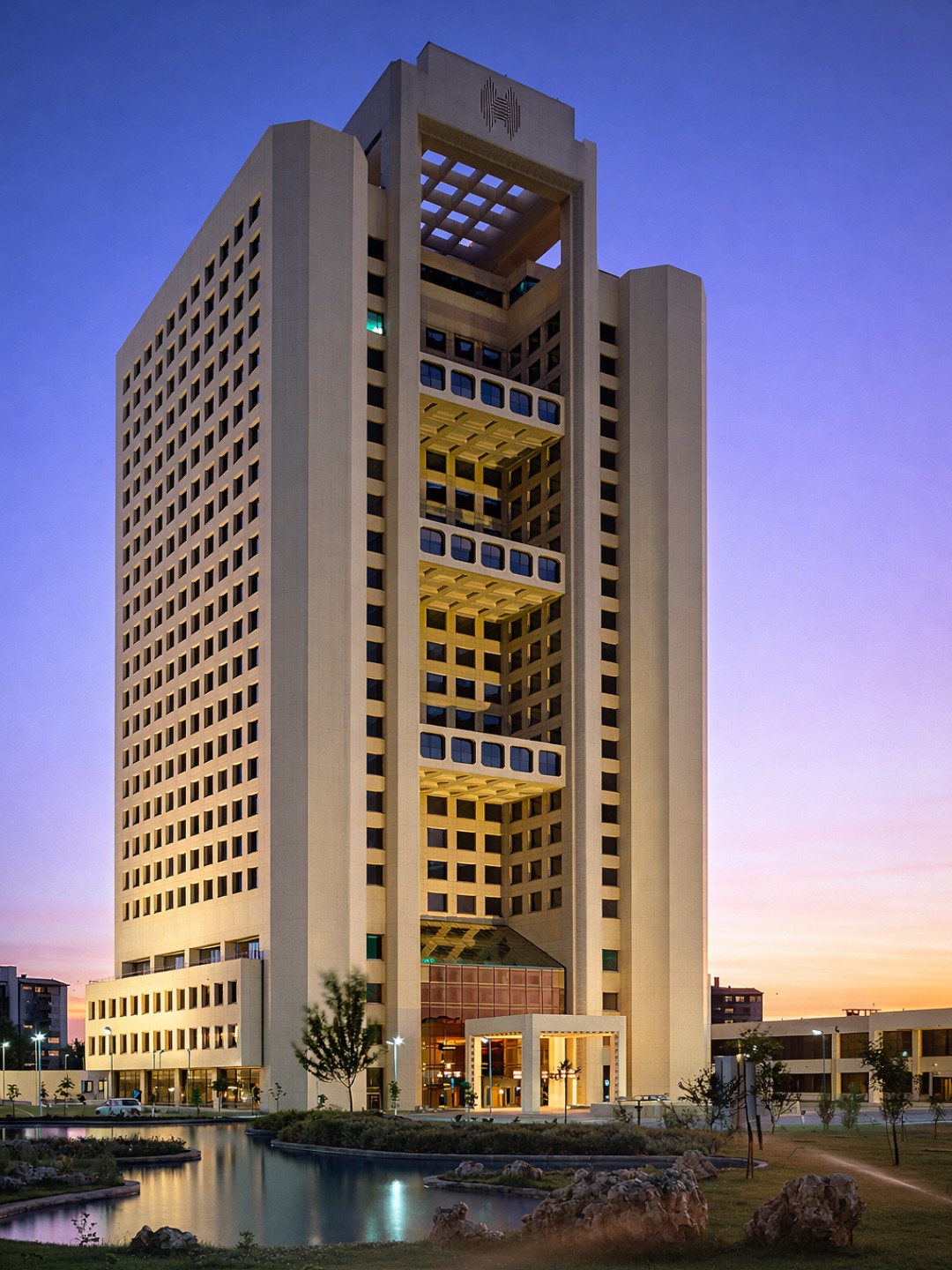
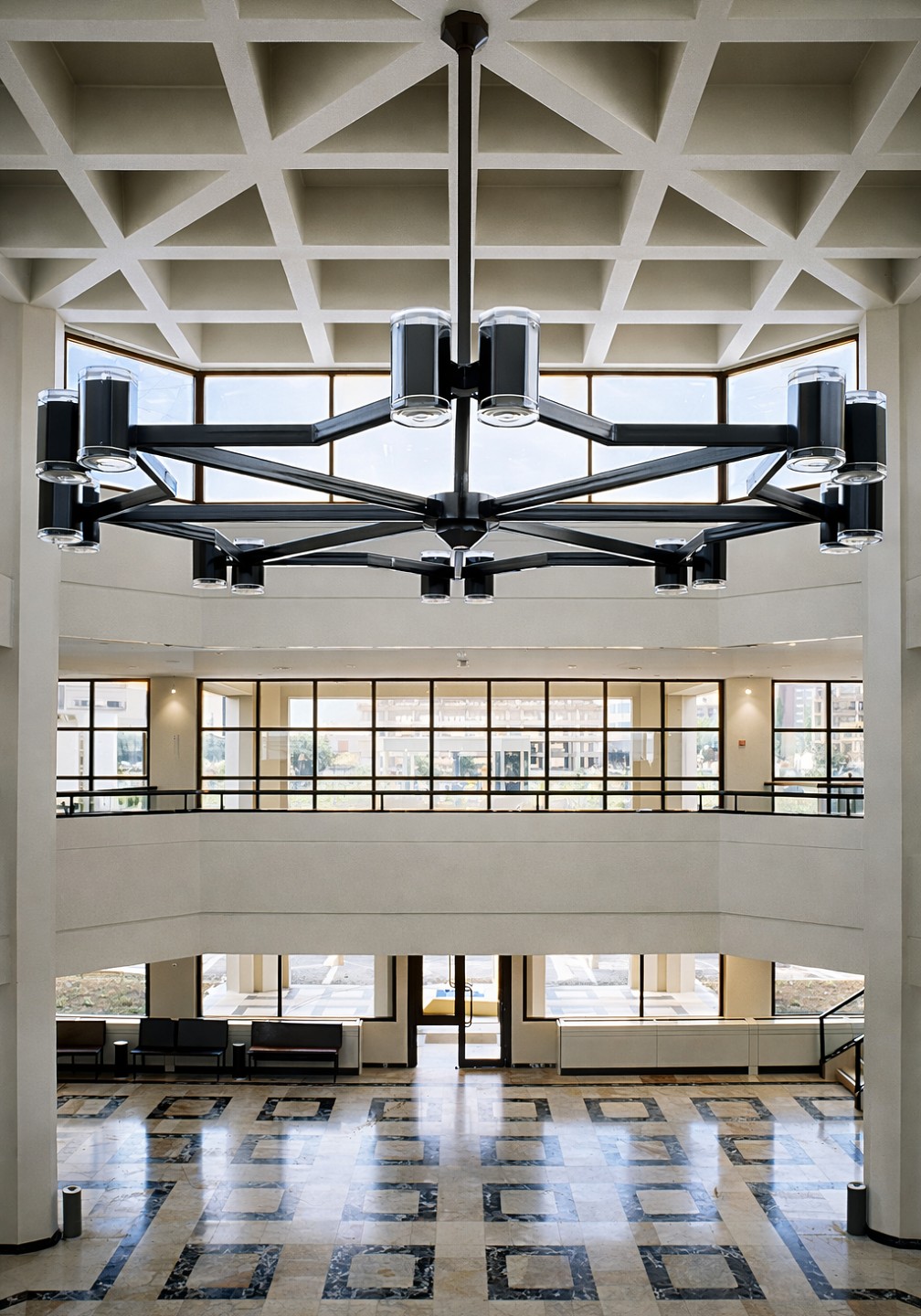
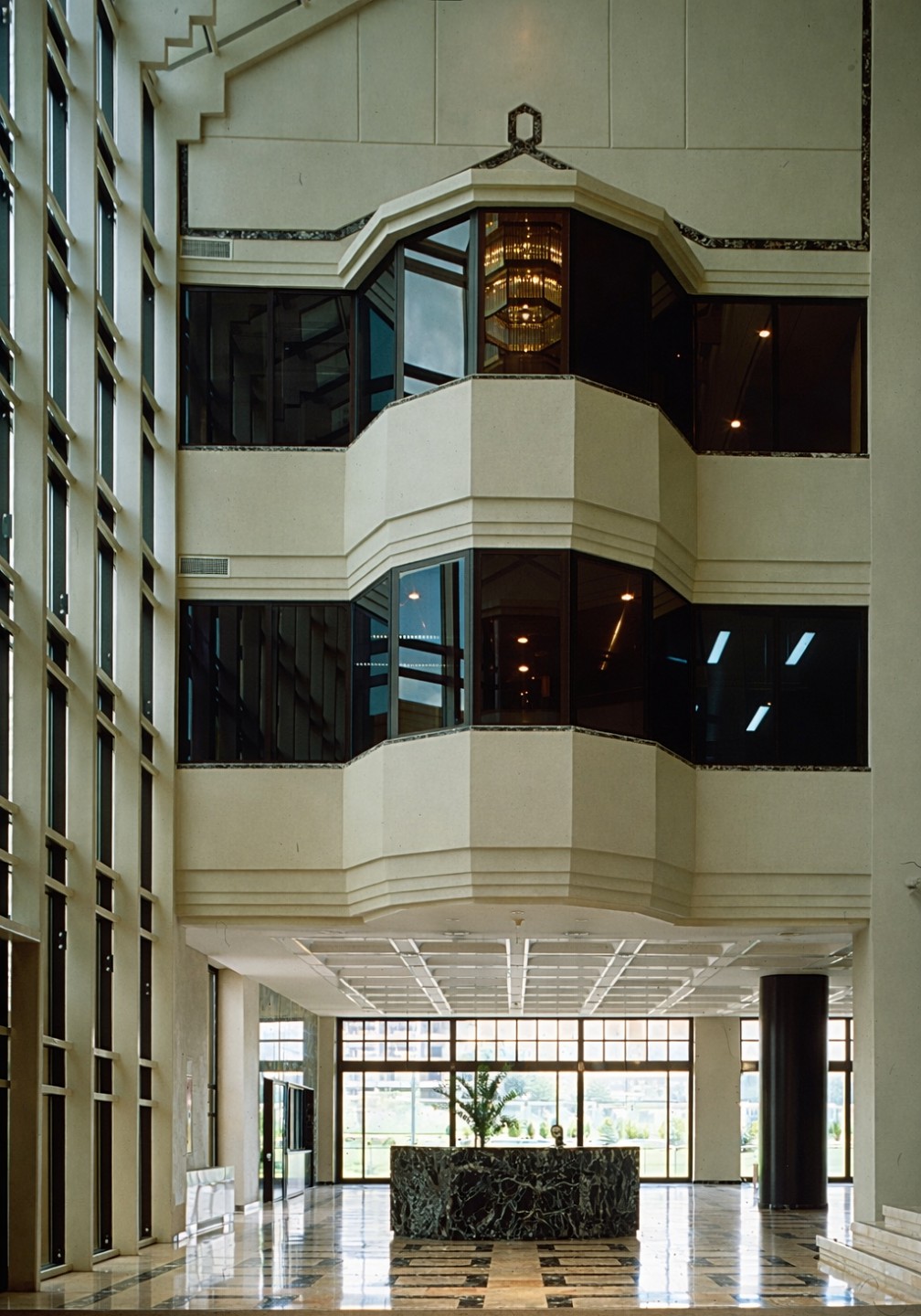
The project, which won first prize in the limited design competition held in 1983 for the Halk Bank Headquarters Building, was purchased by the Undersecretariat of Treasury while construction was nearing completion. The competition brief emphasized the building’s prominent location at the entrance of Ankara and called for a design that would be symbolic not only for the bank but also for the city. In addition, the structure—intended to serve for many years—was expected to offer a new solution beyond conventional typologies and remain open to all technological advancements.
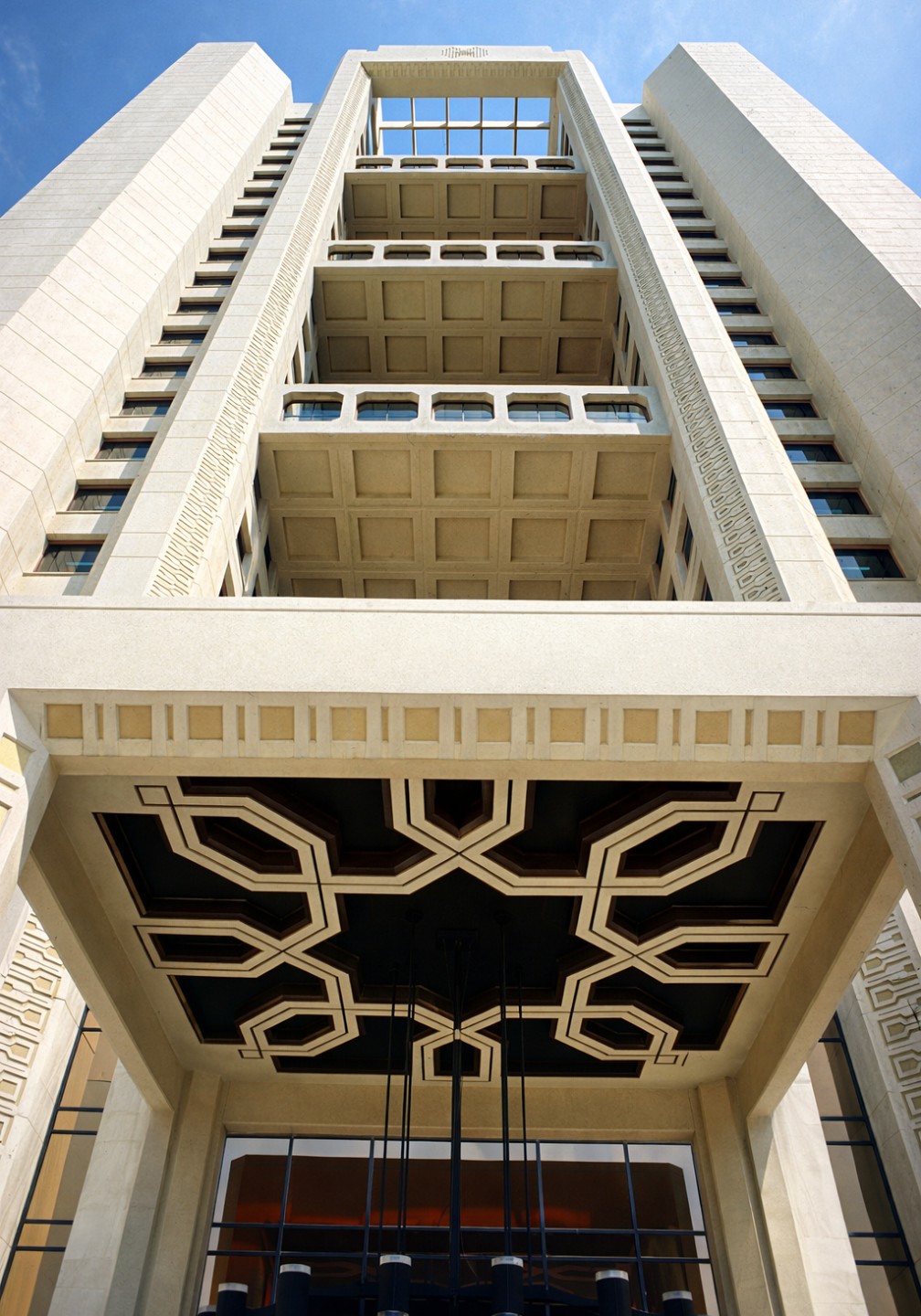
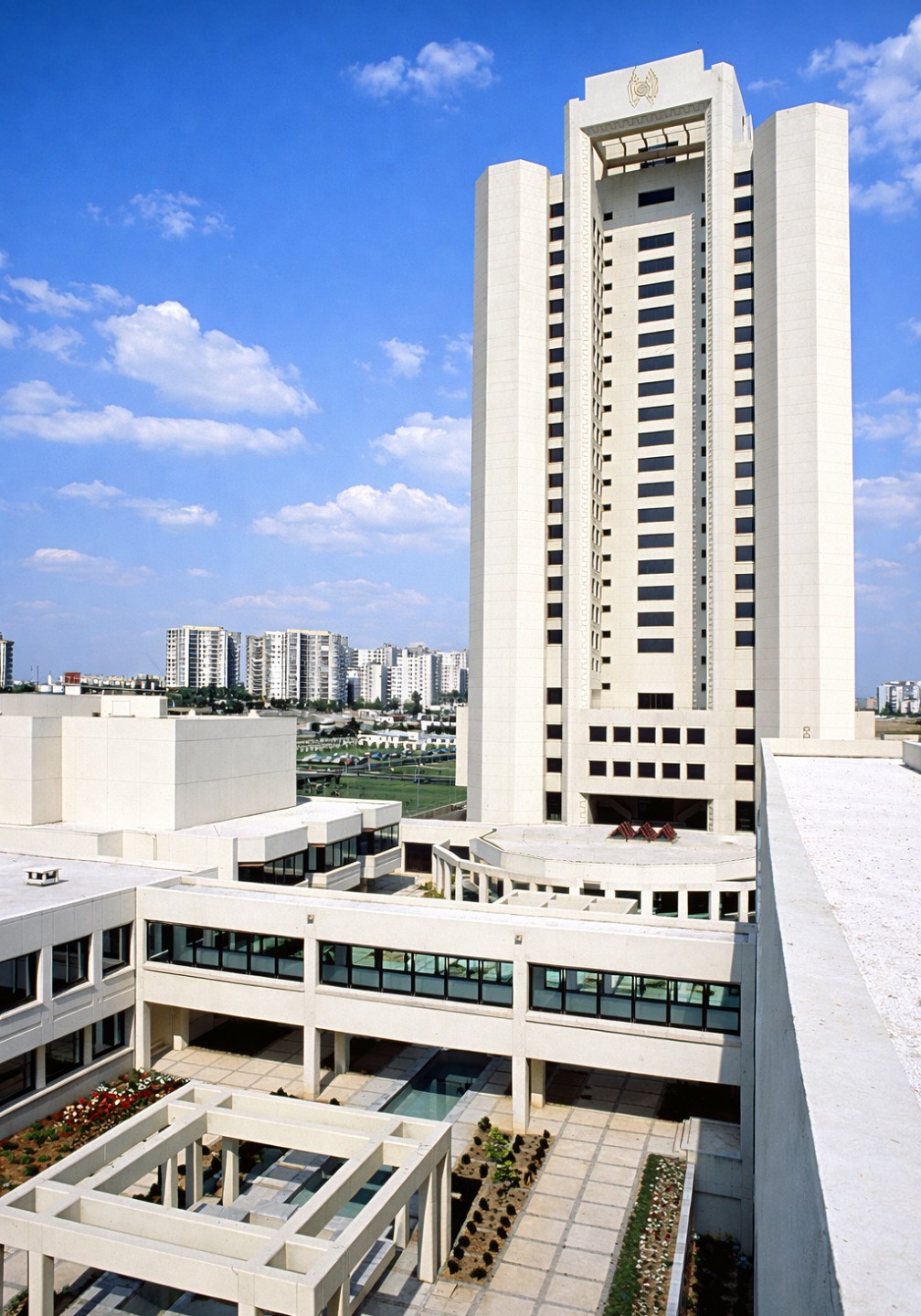
As a result of the desired symbolic presence and functional requirements, the proposed high-rise solution was designed as a square-plan block carved in two directions, forming the image of a monumental gateway at the city’s entrance. Most offices were oriented along the preferred north–south axis, and a single vertical circulation core was positioned to ensure that walking distances did not exceed 25 meters. The carving of the square plan along the east–west axis allowed offices to benefit from natural daylight, while mezzanine gardens placed within the eastern recess at five-floor intervals enabled employees to connect with nature and open air.
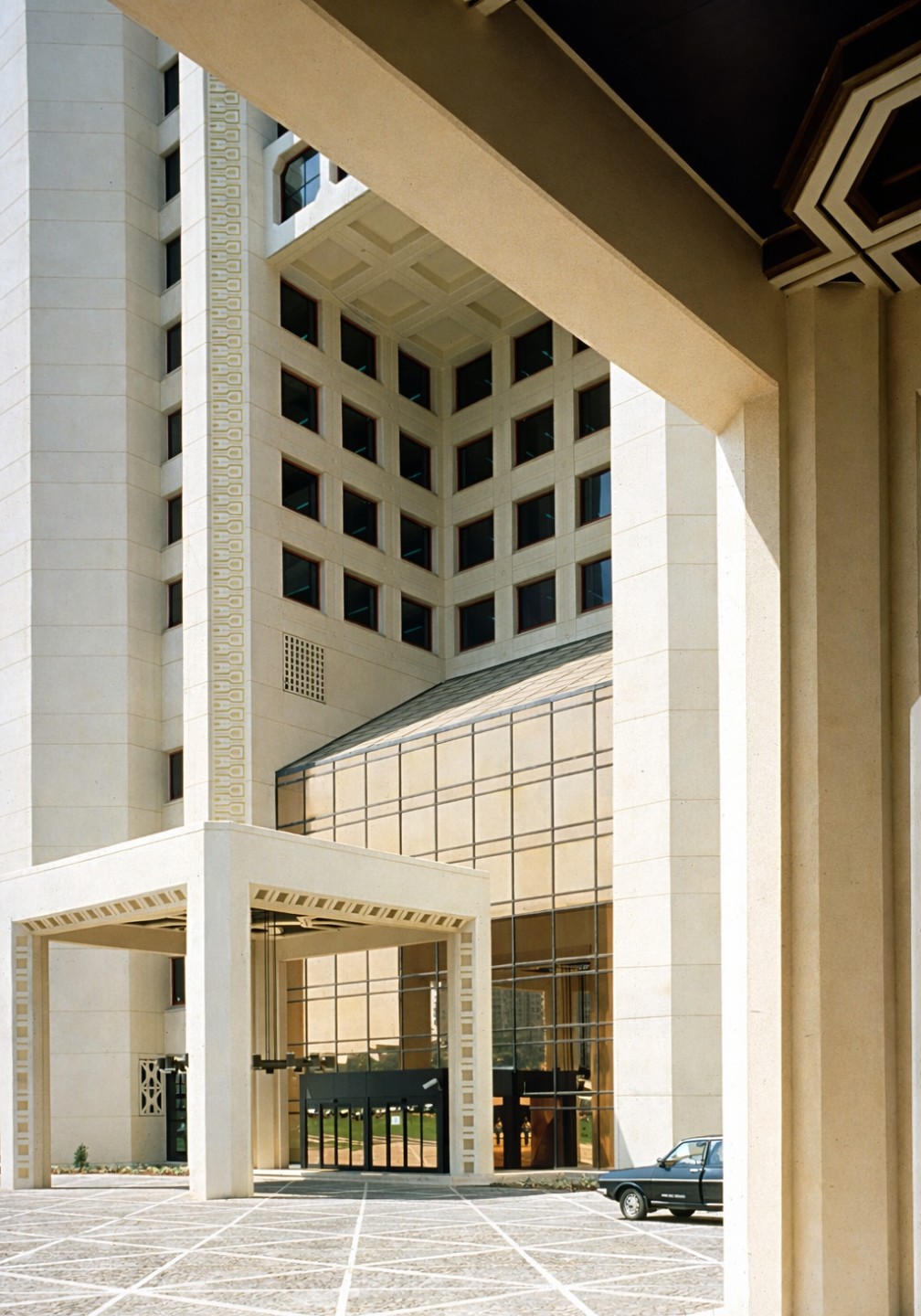
The main building is entered from a square courtyard reached via a tree-lined internal road from the boulevard. The monument and surrounding wall elements that were to define this courtyard, together with the bank’s central branch, were not realized after the building was acquired. In the placement of the complex’s other structures on the site, careful attention was given not only to functional relationships but also to the organization of outdoor life. The multipurpose auditorium, banking school, social club, and guesthouse were positioned around a recreational area created by setting the western portion of the site one level below grade.