


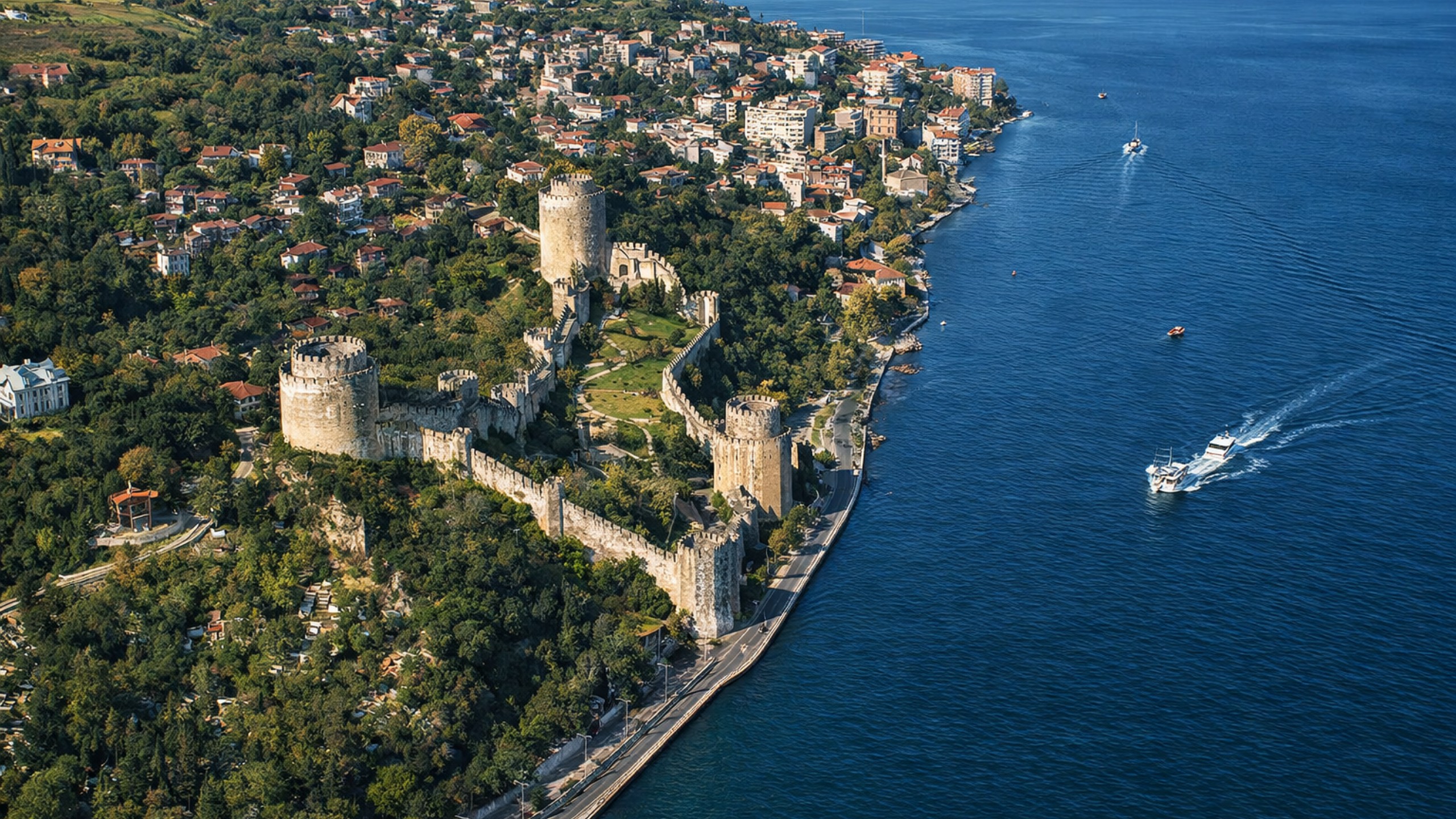
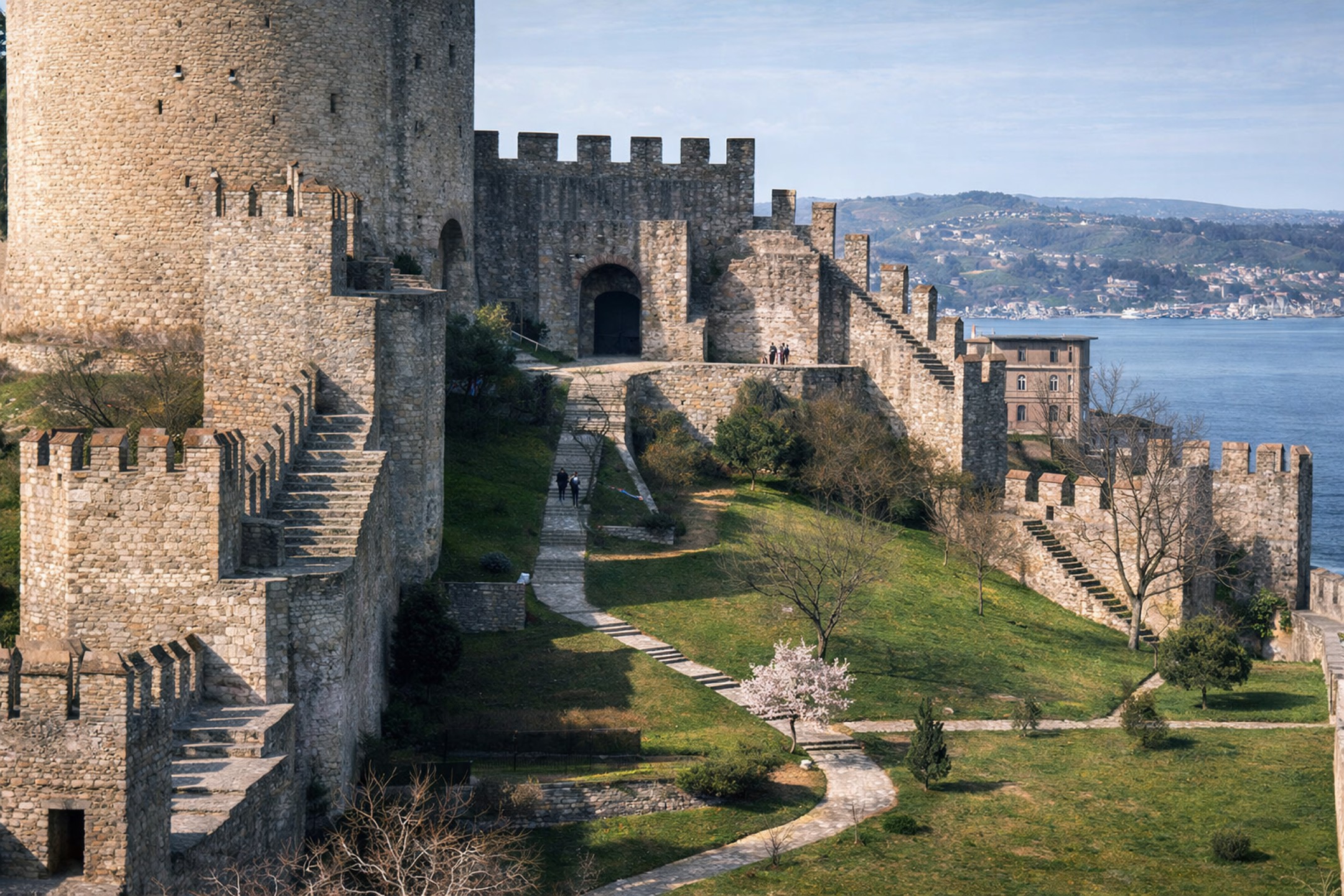
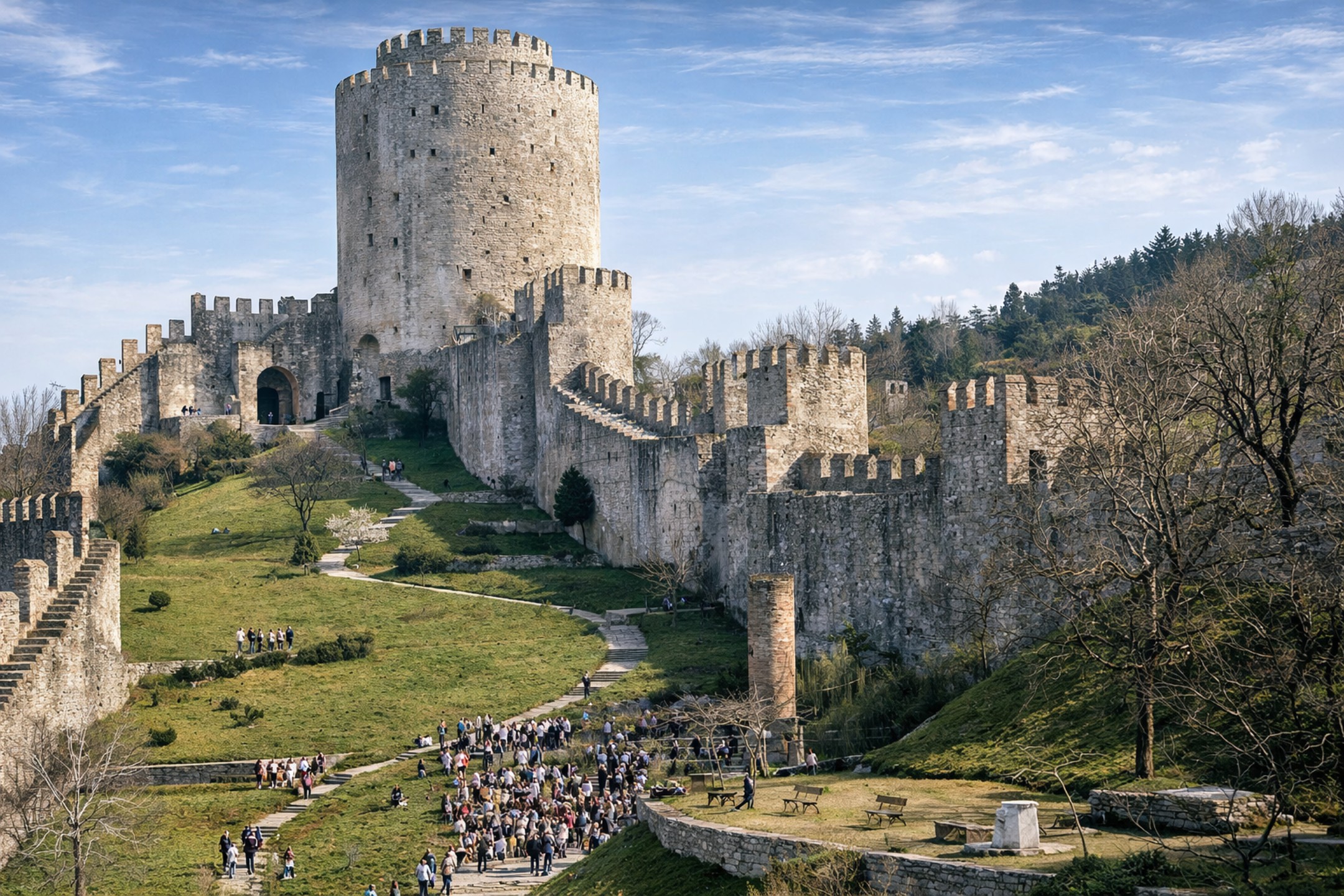
The transformation of Rumelihisarı into a museum—which lost its military significance after the Conquest—was first proposed during World War I, though it remained unrealized at the time. In 1953, the towers and walls were repaired, and the wooden houses within the fortress were expropriated and demolished. Following this, the site became a neglected area that was difficult to navigate. In 1957, a national architectural competition was held among Turkish architects to redesign the fortress as an open-air museum and park. The winning project was implemented, and the Rumelihisarı Museum was officially opened on May 29, 1959, the anniversary of the Conquest.
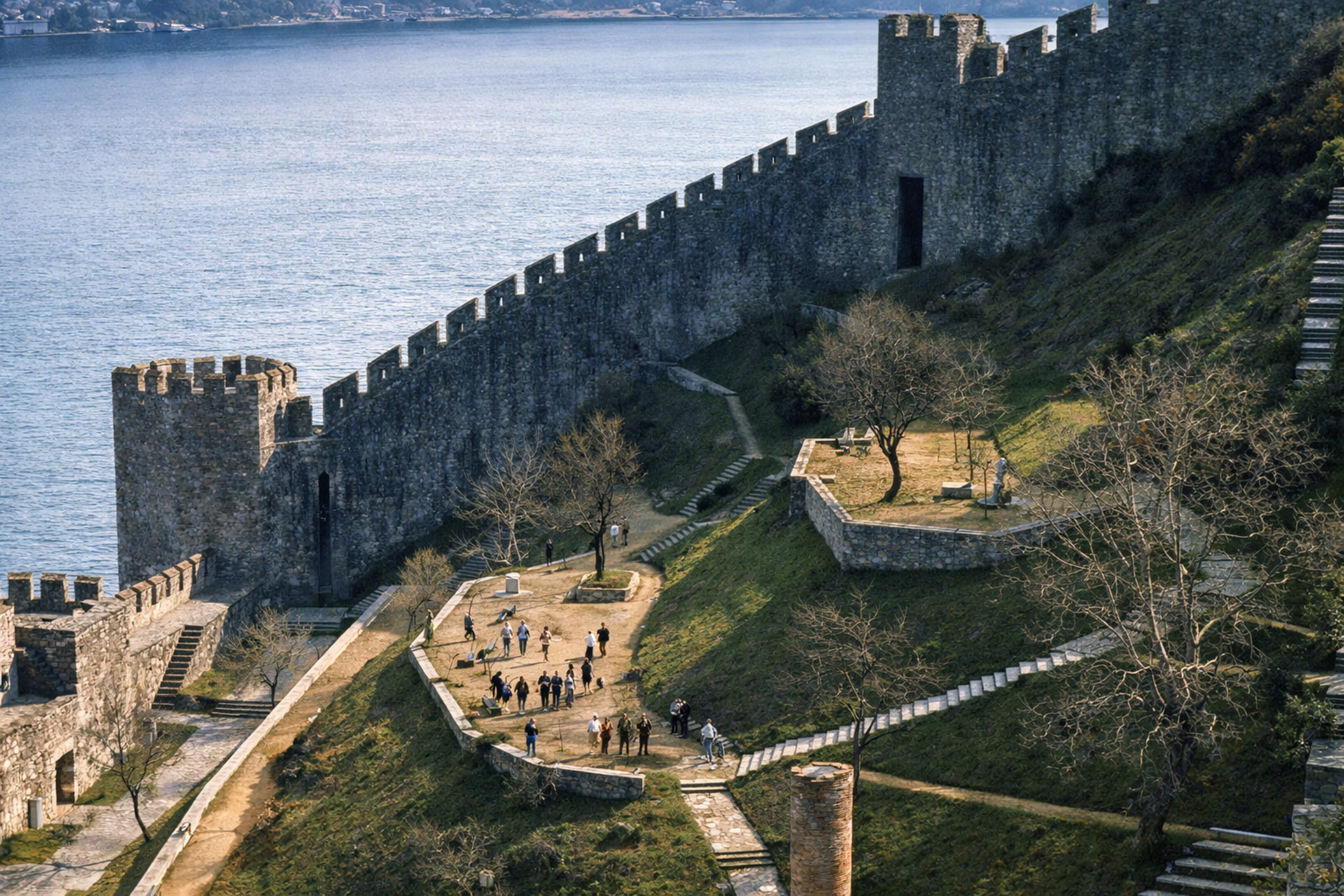
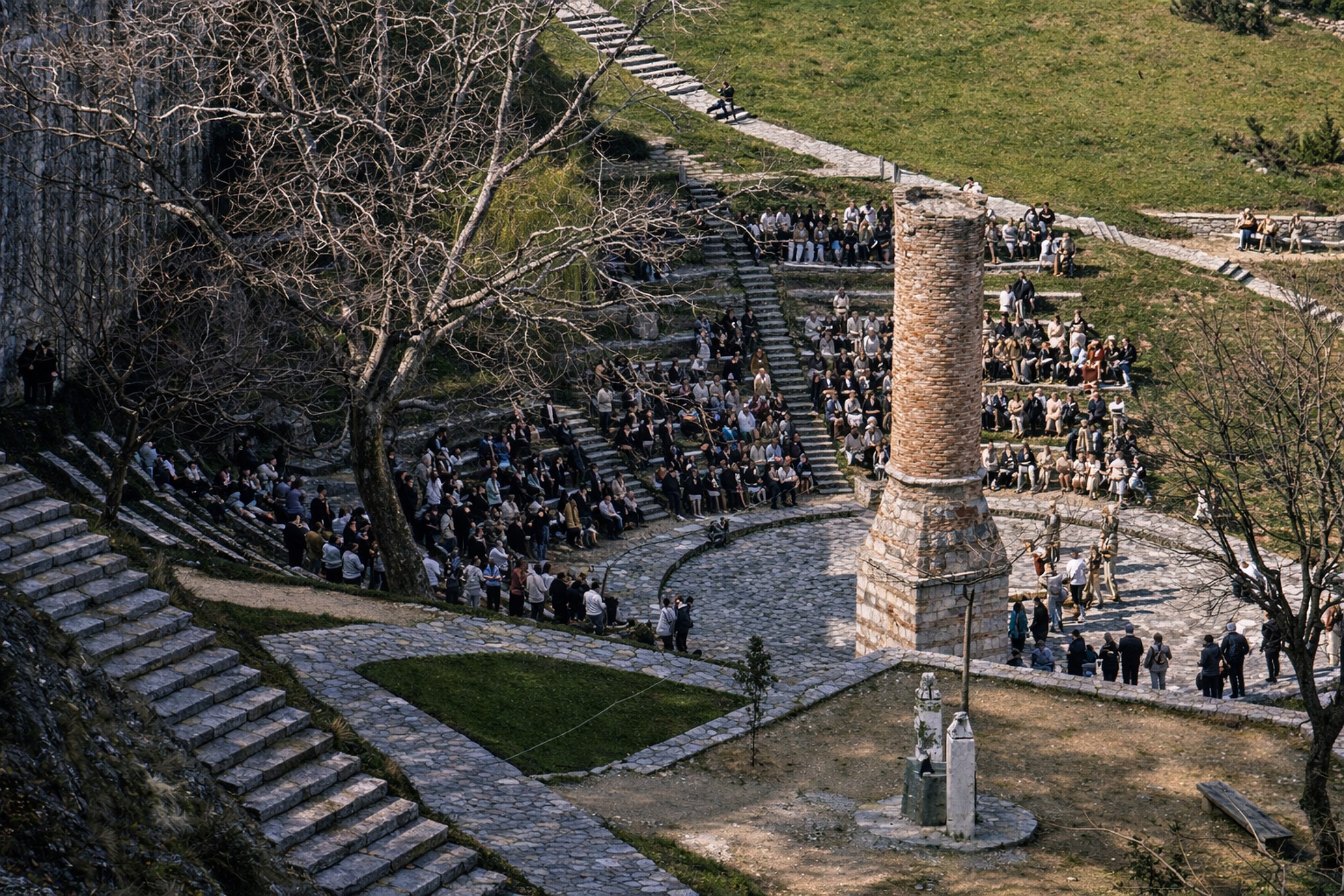
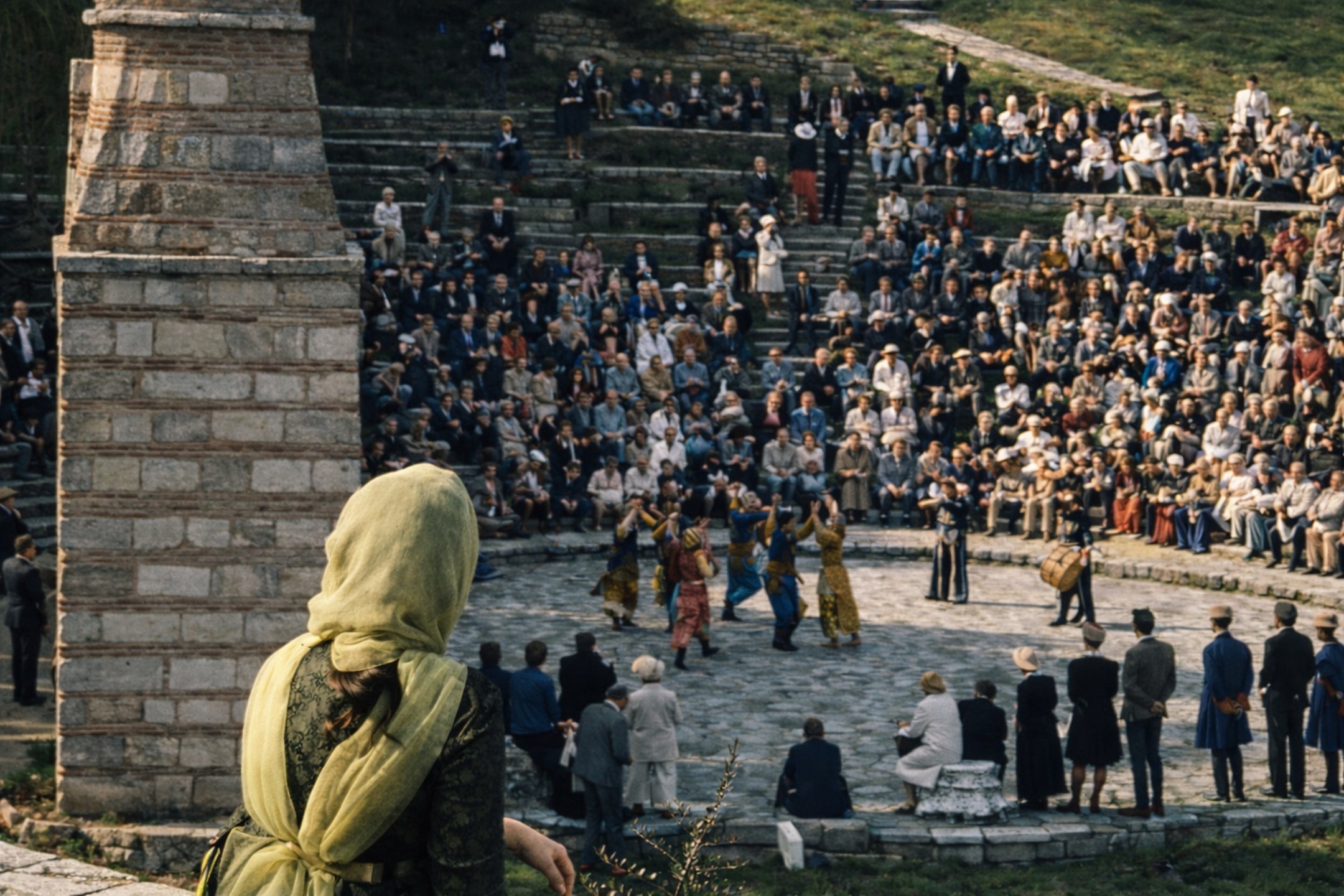
The competition brief required the design of pedestrian paths that respected the steeply sloped internal structure, an area for “mehter” (janissary band) performances and folk dances, leisure and observation terraces, and service units such as administration and sales offices. To fulfill this program, a powerful central space was designed as the focal point of the site. Accordingly, the performance area was organized as a free-form amphitheater in the central section—the most topographically suitable area—situated upon the foundations of the historic mosque and cistern. Paths leading to the observation terraces and towers radiate from this central hub.
Unlike many of its counterparts, Rumelihisarı was built as an offensive fortress, making its harmony with the natural topography essential. To preserve this balance and emphasize the sculptural (plastic) impact of the fortress walls, unnecessary later-period retaining walls were removed. Service buildings, such as the administration and café, were concealed beneath measured terraces, and the new retaining walls required for the observation decks and pedestrian paths were kept to a minimum.